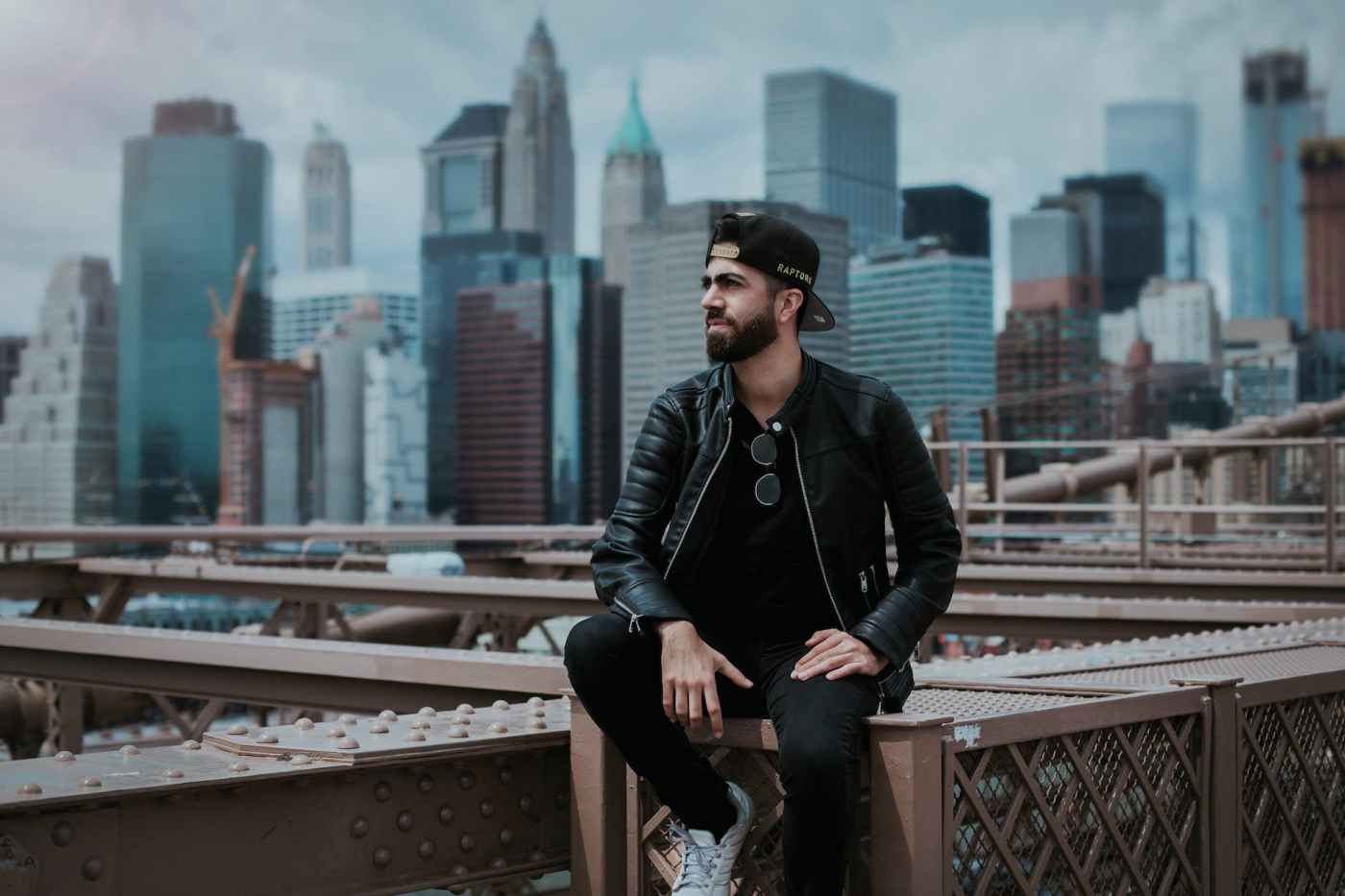
Man. Masculine. Mirage.
If you follow me closely enough you will be acquainted with my contemplations about life & how trauma has intricately shaped my evolution. Truly, as I write this I understand that no one can really understand…unless they can go tit for tat on the count of traumatic events that happened over the course of my life. But, what I’m writing here isn’t a peeing contest. It is however my first public post and write out loud sessions of how I will be processing a segment of my life that I wish to have a happy conclusion on before I die. An integration that leaves me satisfied.
At 44, in what is my mid-life, I realize we never stop learning of course. And, one of the things I admire about myself is that I’m adaptable. Life has taught me there is literally nothing that is set in stone. To live life with an inflexibility and disdain towards new or divergent views or information is to willfully agree to devolve, desist, subsist, and invite nothing but contrast and frustration. It is to live small and to exist within a very narrow scope. I don’t know about you but for me the thought of this makes me feel claustrophobic.
My intelligence is emotional. It is circumspect. It is agile.
From the age of 4 the big question of life has been at the forefront of my conscious awareness, “WHY?” As a trauma survivor and someone who has very unique & unusual lived experiences I’ve always wanted to know, “why?”
When it comes to God, truth, and faith I’ve been able to distill perspectives from quantum physics and cosmology to feel absolutely satisfied in my understanding about their origin (or lack thereof), nature, mechanism, purpose, and of course relativity.
Having these “figured out” now affords me the mental space to try to sift through my lived experience with men to try to understand them in spite of my negative lived experience with them and because of them. From my lived experience and my “hope springs eternal” approach to exploring what is my inescapable counter part it cannot be said that I’m not courageous. And, as a heterosexual and heteromantic woman the issue of romantic love is inseparable from my deep desire to understand the masculine amongst us. One day perhaps I will stop touching the hot, glowing, red eye of the stove. But, that day is not now.
The journey to understanding anyone or anything will always involve looking at the symbology surrounding and characterizing what or who you seek to understand as a first step onto the path. The symbology of a person, place, or thing is what comes before any verbiage is ascribed. Humans existed before language and it is because of symbolism that we gather our first bits of information to inform our instincts about what we’re learning about. Whether something is large, or small, quiet or loud, sharp or soft helps us determine how to approach our subject.
If a willing harmony and oneness can be achieved there is no doubt in my mind that the careful exploration of our symbolism is the genesis of that state.
It is at this point of genesis that I begin my personal journey in exploring, understanding, and relating to men. And, as I process, integrate, summate, and find my own conclusions I wish to make a promise to all men. My promise to you as a man, if you’re reading this, is that I will not be satisfied or tricked into holding a narrow, media swayed, post modern opinion of you. You are as ancient as I. And, I long to understand you from the beginning of time not from the middle of the feminist era. I am here to see and help you see your timeless qualities that are without reproach. I promise to be a safe place of feminine softness that is conducive and receptive and ever curious about the multi-faceted masculine that is you. Sans toxicity. I wish to separate you and perhaps take you on this journey with me to reexamine the symbolism that has been assigned to you. Maybe you can tell me at which points the symbols feel fitting or ill-fitting. Then this blog post will become a living bi-directional, learning adventure. And, who knows maybe in this way to I can create a community! The thought of this makes my heart feel full as I’m about to embark on what could be a journey of a million miles. Are you with me?
With bare feet I walk upon a new canvas and I leave behind narrative paths that do not serve our collectives
My souls and toes so sensitive to the vibration of the earth and my feminine arches serving as etheric connectives
When I meet the collective him my eager and keen intuition will open for unbound observation
The shoes I could have worn to get here would have been familiar and comfortable but would have perpetuated his obfuscation
And, I’m not interested in self-sabotage or treachery.
Many questions are building in my mind. I wonder what the image of him will make clear in me. All this before words.
In exploring your imagery throughout the history of humanity we cannot evade the primal iconography of your phallus. It has come to be defined (with words) as a symbol of power. However, it is also the regenerative part of you. It is a procreative part of you that delivers a bodily elixir of life. Without you, there would be no us. Since you are both how do you feel that the only characteristic concerning your penis that gets mentioned is “power” and not also regeneration and procreation? This reduces men to a narrow scope I believe.
Divine Masculine tell me your thoughts on the words below by Sophie Strand:
“Do we want to hand the masculine a sword of a flowering wand? The sword slices, divides, and subdues. Its tip drags imaginary borders across ecosystems. The sword does not embrace. It does not connect. It does not ask questions. It is not an instrument of intimacy. It either attacks or defends, affirming that every interaction is conflict, and every story is about domination. The sword, perfected by the Romans as the “spatha” (or short sword) for the specific task of maiming and executing prisoners, quite literally cuts the mind off from the body. The sword proposes that we can wield our intellect without our somatic intuition and without our rooted existence in ecosystems. The sword encapsulate the material reductionist idea that we can “cut” something up into discrete parts and thus understand it as a whole- that we must kill the animal to study the animal; that if we dissect enough brains, we might find the secrets of consciousness. The want on the other hand creates connections.
Some of the earliest examples of wands are the apotropaic hippopotamus tusk wands or “birth tusks” used in Middle Kingdom Egypt (1900 BCE), which were carved with lions, snakes, and frogs and used to magically protect pregnant women and children. They are thought by some to have been used specifically, to draw a circle of safety around a woman in labor. Inscriptions on these ancient wands tell us they are “the protector of night” and “the protector of day,” which may indicate a belief that they helped establish temporal order. We also have the snake staffs of Aaron and Moses in the Hebrew Bible, which were used in spiritual debate, to part the waters of the Red Sea, and to draw water from a stone. These magical staffs that flicker between the solid and the serpentine flow into the healing caduceus of Hermes, a winged wand encircled by two snakes. Rhabdomancy, or dowsing, once used forked wooden wands to magically survey the land for water, a practice that may date back nearly 8,000 years, as evidenced by art in the Saharan Tassili caves. Homer makes numerous references to magical wands in both the Iliad and the Odyssey, putting them in the hands of Circe, Athena, and Hermes. Celtic mythology also features many wands, rods, and staffs; for example, in the famous legend of Fionn MacCumhaill, the hero uses hazel wands to transform people into animals, as a divination device, and to defend himself from harm.
The wand encircles us with protection during biological rites of passage from birth to marriage to death. It draws us to water. It enchants us into closer kinship with animals and plants and landscapes by literally transforming us into them. It mends broken bodies, knits wounds, and softens minds hardened by anthropocentrism (human centric existence of all things). While swords are made only by human hands, wands, it may be argued, predate human beings themselves. All it takes is a woody shoot bursting into blossom. A cedar branch. A sprig of hawthorn. A tree erupting in lichens. For that very reason, perhaps, wands have been central to magical and ritual practices since before human history began to be recorded.” (The Flowering Wand, by Sophie Strand).
My question here is what resonates most with the masculine? The sword or the wand? The answer to that is very revealing and is worthy of sitting around a fire with.
Lots of love,
Cozett Dunn
 The Catalyst
Leave a comment